Research Overview
Memory Brain States
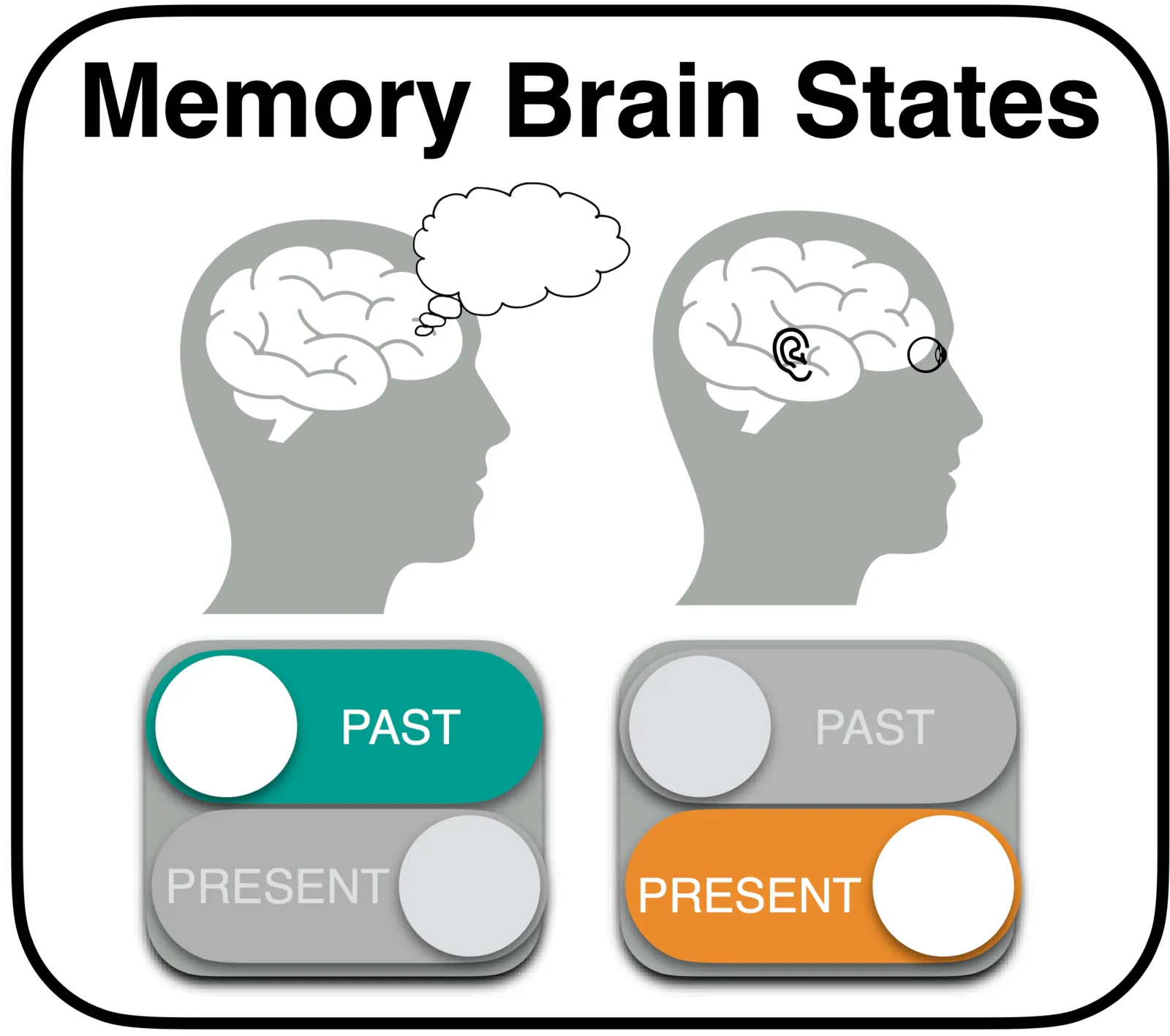
Our lab investigates how we engage specific memory brain states and how these states affect behavior. Imagine running into someone who you know, but whose name you’ve forgotten. You will be faced with two opposing demands: do you try to remember their name or do you instead focus on your conversation with them? Using machine learning approaches, we measure large-scale brain activity patterns as individuals direct their attention to the past in order to retrieve stored information vs. direct their attention to the present in order to encode new information.
Memory Organization
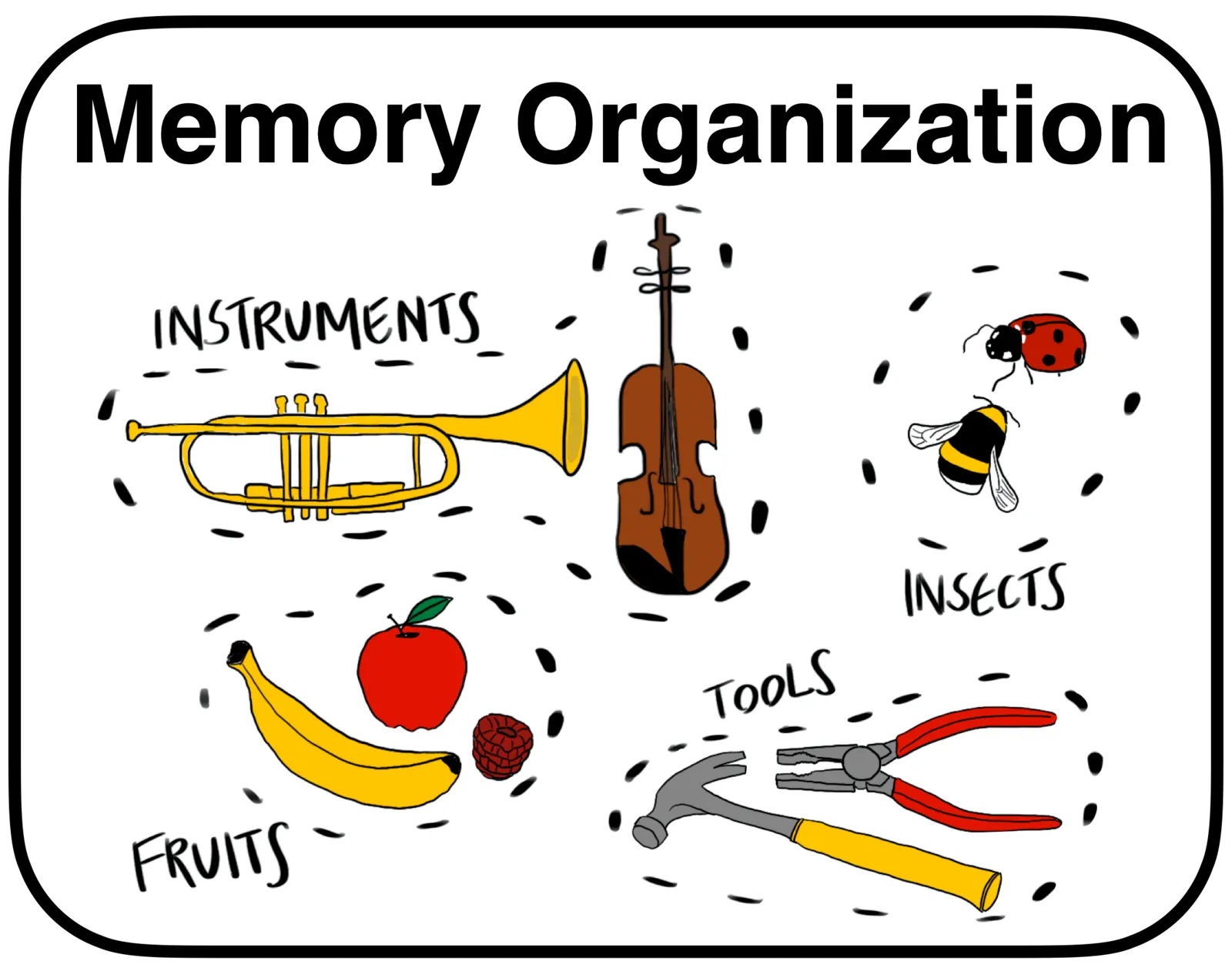
A primary focus of the lab is understanding how organizational processes support our ability to remember. Think back to restaurants you’ve been to in the last year. Did you think of them by what type of food they serve? Where they are located? When you visited them? Each of these (and other) forms of organization — semantic, spatial, temporal — facilitate your ability to remember your experiences, as evidenced by extensive behavioral data. Our lab aims to understand how these organizational processes arise and are supported in the brain, both when you initially form or encode your memories and when you attempt to retrieve memories.
Multimodal Recording
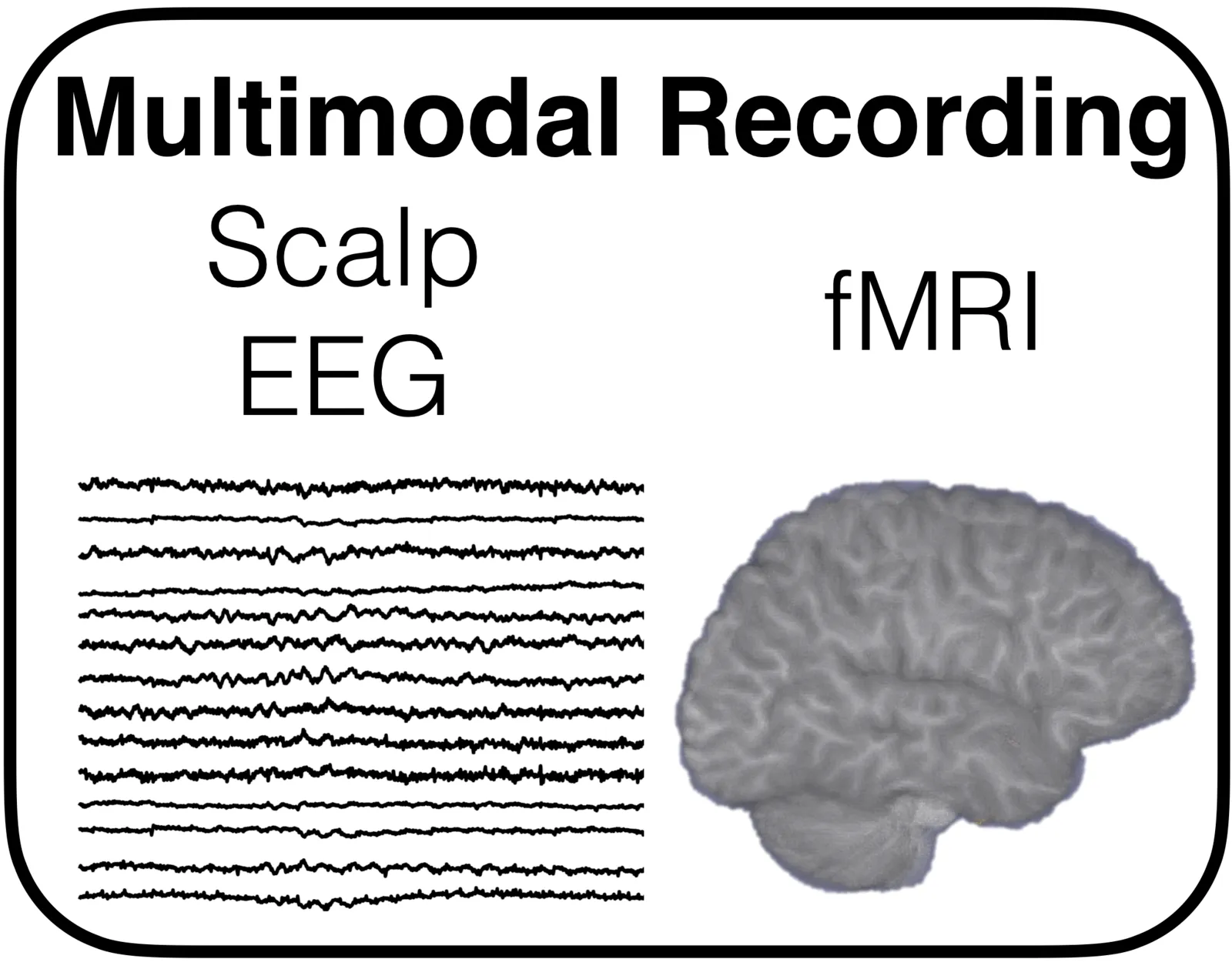
Our lab uses multi-modal recordings to understand the spatiotemporal dynamics that underlie cognition. While participants perform behavioral tasks, we either record scalp electroencephalographic (EEG) activity or collect functional magnetic resonance imaging (fMRI) data. EEG provides multi-dimensional data with high temporal resolution, allowing us to investigate how cognitive processes unfold on the order of milliseconds. Complementary to the high temporal resolution of EEG, the high spatial resolution of fMRI allows us to investigate how brain regions work together to support cognition.
Analysis Approaches
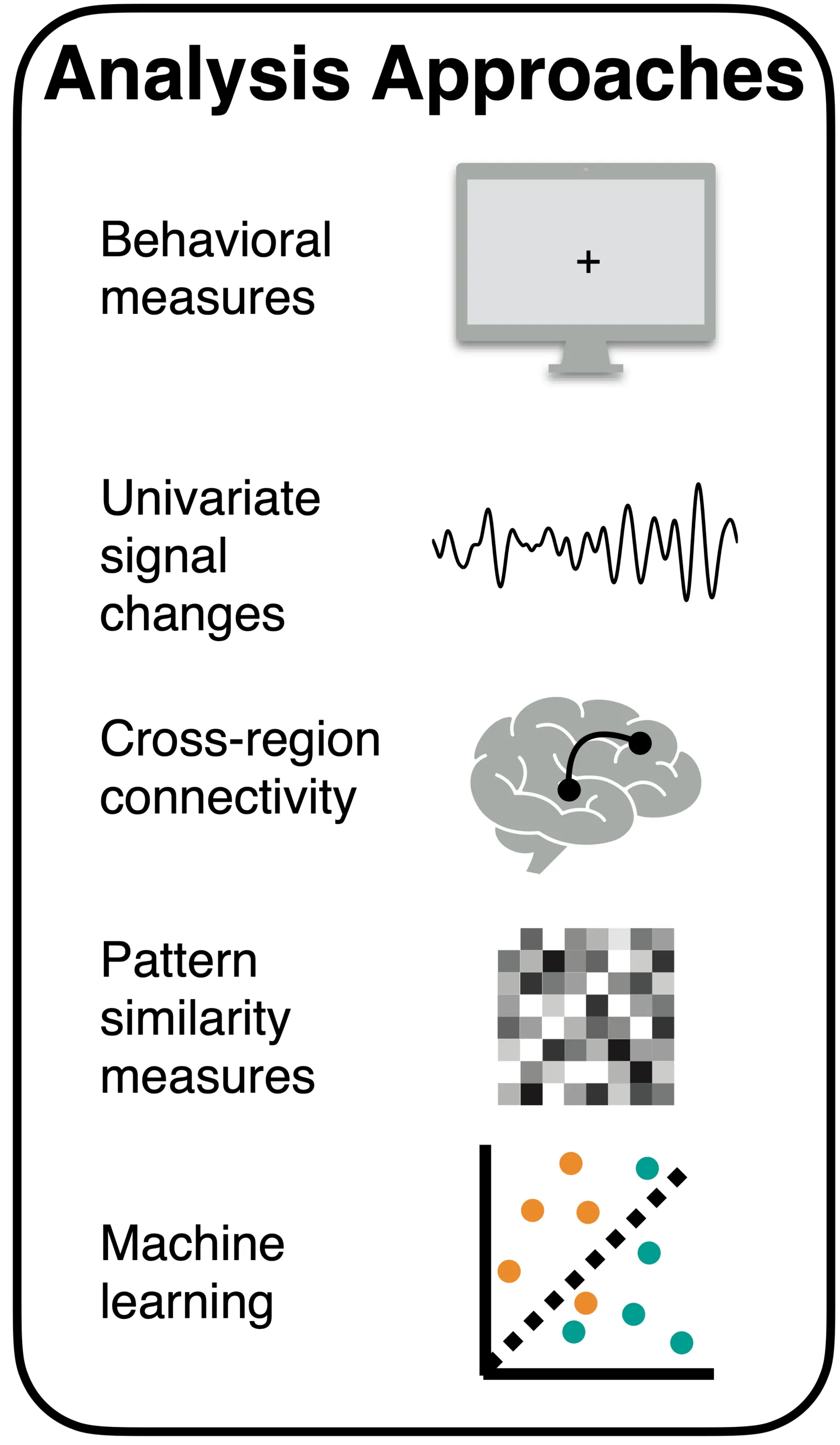
The LTM Lab uses a variety of analytic methods to understand memory processes. We obtain behavioral responses while we record EEG or fMRI and link behavior to neural responses. We investigate univariate changes in spectral components of EEG data and the fMRI BOLD signal as individuals form and retrieve memories. We measure correlated activity between cortical sites and between cortical and subcortical sites. We use multivariate and machine learning methods to decode distributed information across the brain.